
THE BOTTOM LINE
Non-therapeutic residential camps that are intentional about character development occupy a critical middle ground between purely recreational programs and clinician-led therapeutic camps. These “high-growth traditional” camps build resilience through outdoor challenge, community living, and structured values frameworks rather than therapy curricula. Camp Highlander’s approach, built on the pillars of courage, honesty, integrity, and faith, is designed to help children handle failure, overcome fears, and develop social confidence in a cabin-based “family” environment in Mills River, North Carolina.
Mental fitness is not the same as mental health treatment. A child can be psychologically healthy and still benefit enormously from an environment designed to stretch their resilience, expand their social confidence, and build the kind of grit that does not develop in air-conditioned classrooms or screen-mediated friendships. That is the gap a high-growth traditional summer camp is built to fill. And increasingly, it is the camp model that pediatricians, therapists, and school counselors are quietly recommending to parents.
This article maps the spectrum of residential camps available to families today, explains where the non-therapeutic, character-focused model sits, and details the specific mechanisms a well-designed traditional camp uses to build resilience. The goal is to give parents — and the practitioners who advise them — a clear framework for evaluating whether this kind of camp is the right fit for a particular child.
The Camp Spectrum: Recreational, High-Growth Traditional, and Therapeutic
Residential summer camps fall along a spectrum defined by intensity of intervention and intentionality of growth. Most parents only know the two ends of that spectrum exist. The middle category (the high-growth traditional camp) is the one most likely to fit a child who is developing well but would benefit from a structured push.
| Recreational Camp | High-Growth Traditional | Therapeutic Camp | |
|---|---|---|---|
| Primary Goal | Fun, activities, summer enrichment | Character development, resilience, social confidence | Treatment of a diagnosed mental health, behavioral, or developmental condition |
| Staff Model | Activity instructors and college-age counselors | Trained counselors operating inside an explicit values framework, with leadership that models behavior | Licensed clinicians, therapists, and clinical staff |
| Daily Structure | Activity rotation; minimal community structure | Cabin family + activity progression + intentional evening programs | Clinical schedule with therapy sessions, group work, and structured behavior plans |
| Best Fit For | Children who simply want a fun summer | Healthy children who would benefit from stretching, struggling, and growing | Children with a clinical diagnosis requiring active treatment |
The high-growth traditional camp is not therapy. It does not diagnose, it does not treat, and it does not market itself as a clinical intervention. What it does is create conditions like outdoor challenge, community living, manageable struggle, and consistent adult modeling that produce measurable growth in resilience, social skills, and self-concept for the average child. Camp Highlander operates squarely in this category.
How Camp Highlander Builds Resilience: Four Specific Mechanisms
Resilience does not develop from a lecture. It develops from repeated, supervised experiences of difficulty followed by support, reflection, and a return to capable functioning. A well-designed traditional camp engineers four of these experiences into the daily rhythm of the session.
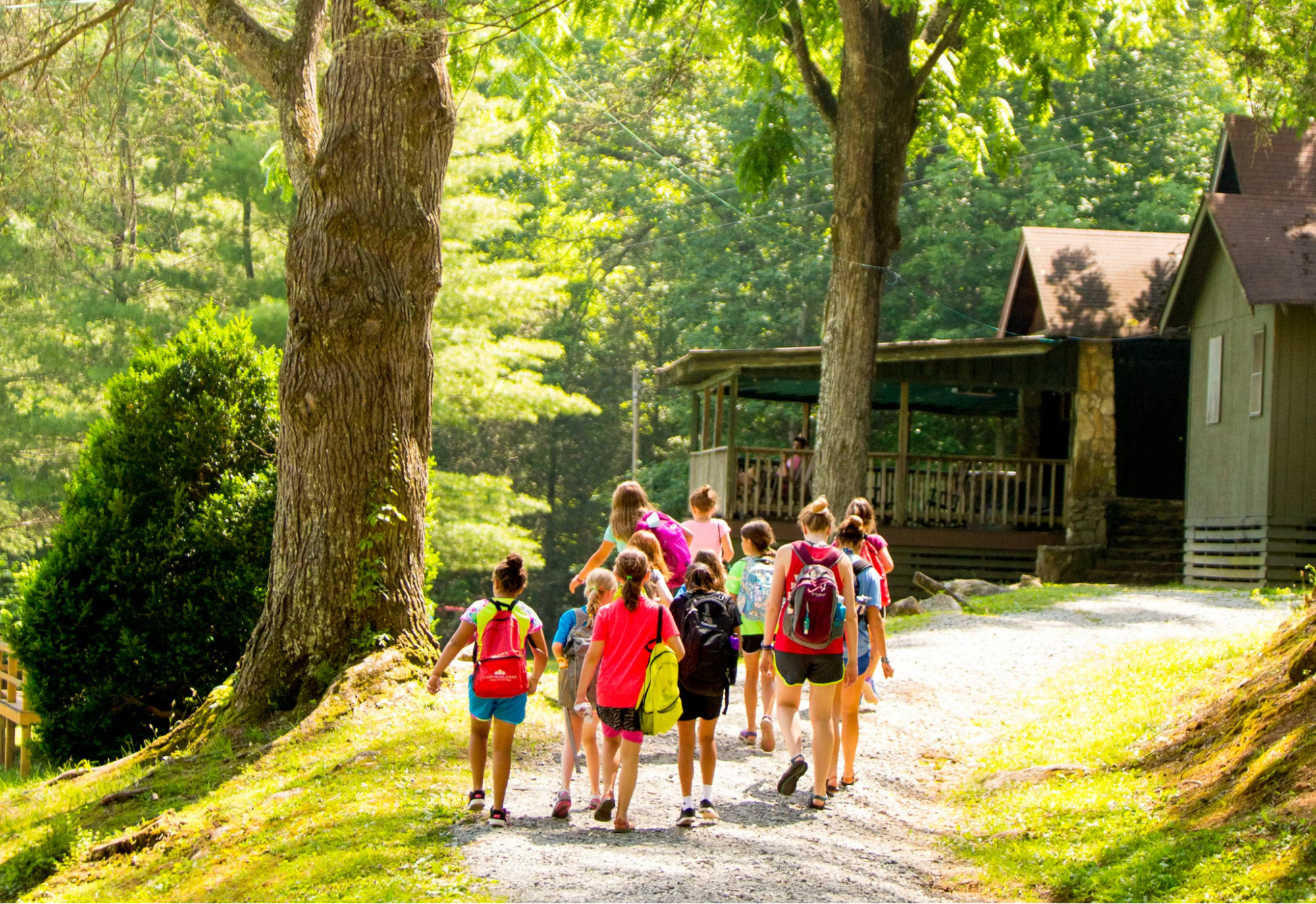
1. The cabin unit as family. Approximately 10 campers live with 2 trained counselors for the duration of the session. Inside that small group, kids practice the skills no curriculum can teach:
- Navigating a roommate dispute at 9:00 p.m.
- Apologizing without an adult prompting them
- Asking for help in front of peers
- Learning that their cabin will still be there for them tomorrow.
The cabin functions as a low-stakes laboratory for the social challenges of adult life.
2. High ropes, climbing, and structured fear management. Activities like the high ropes course, climbing wall, and overnight wilderness trips put children in front of a fear they can name, with a clear physical task and a supportive cohort of peers and instructors. Doing the thing they were (once) afraid of reshapes a child’s sense of what they are capable of. This is not therapy. It is repeated, embodied evidence that fear is something they can act through. They were created to conquer.
3. Evening programs that build courage through action. Camp Highlander’s evening programs invite vulnerability by nudging campers just outside their comfort zones — in the most supportive environment imaginable. A high-energy square dance, a spirited cabin competition, the legendary camp talent show: these moments hand kids a stage to try things they’d never otherwise dare to attempt. When a camper stands up in front of the entire camp community, they aren’t just performing — they’re building a foundation of courage and self-assurance. And as the community cheers through every missed step and nervous note, it reinforces a vital lesson: real strength lives in the willingness to try something new. Those shared experiences help campers turn “I can’t” into a lasting confidence that follows them long after the summer ends.
4. Manageable independence inside a safe perimeter. Campers manage their own laundry bags, write their own letters home, set their own activity goals through the Master of the Mills program, and decide whether to go for the next level on the climbing wall. Every one of those decisions is small. Together, they form the muscle of self-direction that a child carries into the school year.
Why Pediatricians and Therapists Recommend Non-Clinical Camp Environments
Practitioners working with children are increasingly aware of the limits of office-based intervention. A 50-minute session once a week cannot produce the kind of growth that 14 days of immersive community living can. For children whose presenting issues are subclinical — mild social anxiety, low frustration tolerance, screen overuse, sibling-driven identity blurring, or simply a need to develop confidence — a non-clinical, high-growth camp is often the more efficient and more durable intervention.
The reasons clinicians cite are consistent. A traditional camp removes the screen environment that drives many contemporary mental fitness issues. It places the child in a peer group that is supervised but not therapized, which preserves the natural social dynamics that produce growth. It runs on a 24-hour clock that creates more opportunities for skill-building in two weeks than a school year of social-skills groups can offer. And it returns the child to their family with a story they own — not a treatment plan.
The key qualifier is fit. A high-growth traditional camp is not the right setting for a child in active crisis or one who requires clinical staff and a therapeutic milieu. For those families, a true therapeutic camp is the appropriate referral. For the much larger group of children who are developing normally but would benefit from a structured stretch, a camp like Camp Highlander is exactly the right tool.
The Highlander Creed: Courage, Honesty, Integrity, Faith
Character development without a framework is just a slogan. Camp Highlander operates inside an explicit values structure (the Highlander Creed) built on four pillars:
- Courage
- Honesty
- Integrity
- Faith.
These are not posters on the wall. They are the language counselors use during cabin talks, the criteria older campers reference when mentoring younger ones, and the lens through which evening programs and end-of-session recognition are framed.
The function of the Creed is to give children a shared vocabulary for the work of growing up. A 9-year-old who admits she was afraid on the climbing wall has a word for what she just demonstrated: courage.
A 13-year-old who tells the truth about something he broke in the cabin has a word for it: honesty.
Over a session, those words stop being abstractions and become identity. That is the mechanism by which a non-therapeutic camp produces durable change.
How to Evaluate a Camp’s Mental Fitness Approach
If you are a parent or a practitioner trying to determine whether a camp is genuinely positioned in the high-growth traditional category, the following questions are diagnostic. A camp that cannot answer them clearly is more likely a recreational program with mental fitness language layered on top.
-
What is your explicit values framework, and how is it embedded in daily programming? A real framework has language, rituals, and reference points that staff and campers actually use.
-
How are counselors trained to facilitate cabin-based social-emotional moments? Look for documented training that goes beyond activity instruction.
-
What is the counselor-to-camper ratio, and how long do counselors stay with the same cabin? Continuity is the precondition for trust.
-
What is the camp’s policy on phones and screens? A meaningful mental fitness environment requires meaningful screen separation.
-
Can the camp describe the specific developmental outcomes they target, and how they recognize them? Vague “builds confidence” language is a yellow flag; specific behaviors and rituals are a green one.
-
How long has the camp operated, and how stable is its leadership? Mental fitness outcomes are produced by culture, and culture takes decades to build.
Camp Highlander has been answering these questions in the same way for nearly seventy years — since 1957 The cabin model, the Highlander Creed, and the family leadership are not marketing tactics. They are the operating system of a residential program designed to make children measurably more resilient, more socially confident, and more capable of handling the rest of their lives.
| Learn About Our Character-Building Approach Talk to our team about how Camp Highlander’s non-therapeutic, high-growth model could fit your child. Schedule a parent screening call to discuss your child’s needs and find the right session for your boy or girl! |
|---|